Aeqium vs Pave: Which Compensation Planning Platform Is Right for You?

Pave and Aeqium often show up in the same evaluation, but they were built to solve different problems. Pave started as a compensation benchmarking and market data product, then expanded into planning. Aeqium was built from the ground up as a compensation planning platform, with execution as the core product, not an add-on.
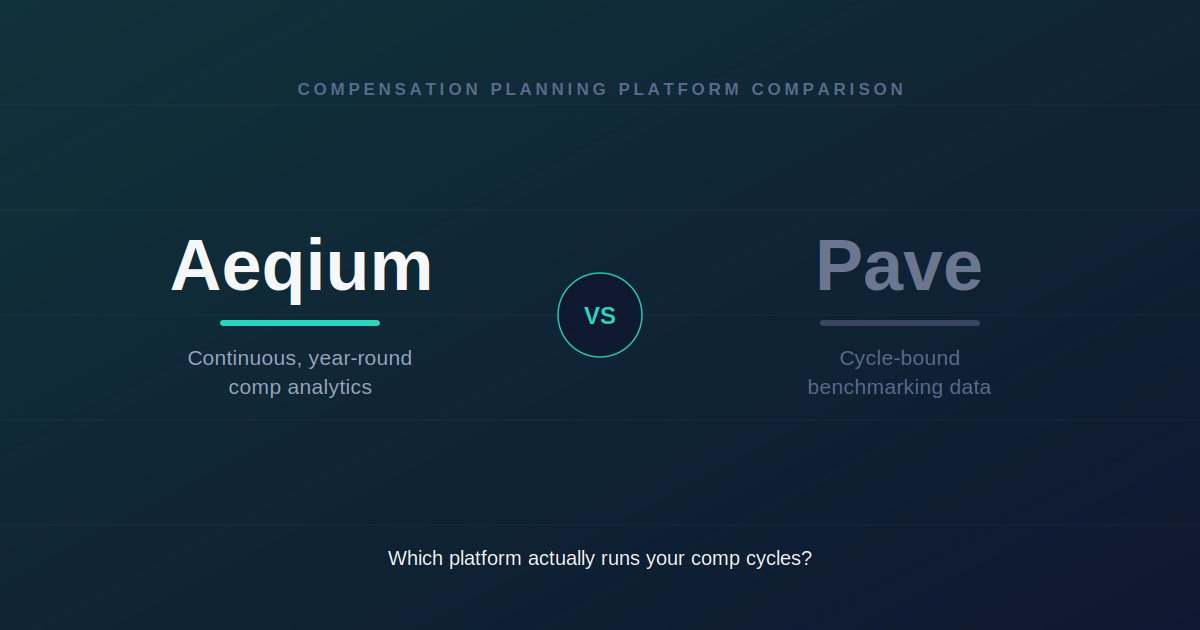
That distinction shows up most clearly in what happens after a comp cycle closes. Aeqium gives comp teams continuous visibility between cycles. Pave does not. For teams that need to track flight risk, pay compression, and decision patterns year round, not just during a two-week merit window, that gap matters.
Why Comp Teams Choose Aeqium
Beyond the gap in between-cycle analytics, two things set Aeqium apart regardless of what platform you're comparing it to.
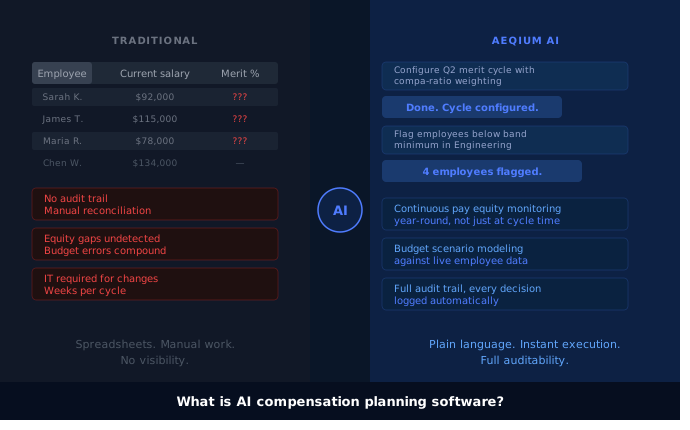
Aeqium executes, it doesn't just advise. Most platforms in this category, including Pave, are built to surface data and leave the execution work to you. Aeqium's AI is different: Aeqium Assist handles the execution of compensation planning tasks directly, automating the repetitive, error-prone work that normally lives in spreadsheets. The Analyst handles the analysis side, surfacing the patterns and data comp leaders need without requiring them to build their own models. Together, that means less manual work at every stage of a cycle, not just better visibility into it.
Aeqium bends to how you work, not the other way around. Comp teams that have used rigid platforms know the pattern: every process change requires a support ticket or a workaround back in Excel. Aeqium is built with the flexibility to configure workflows, logic, and reporting directly, without waiting on a vendor to make the change for you. That matters most for division leaders and managers who are used to Excel's flexibility and resist being forced into rigid HR software. Because Aeqium feels familiar and adaptable, teams adopt it without a fight.
Where Pave Falls Short
Pave's product is built around a single compensation cycle: benchmark, plan, execute, close. Once the cycle ends, so does most of the platform's usefulness. Pave does not currently offer embedded data analytics tools, which means comp teams lose visibility the moment the cycle wraps.
This shows up directly in user feedback. Pave reviewers on G2 have specifically asked for more flexibility in report customization, and G2's own comparison data flags a lack of advanced customization options as a limitation relative to competitors. For a comp team that wants to run continuous reporting, compare planning decisions across quarters, or flag pay compression before it becomes a retention problem, Pave's cycle-bound structure works against them.
Aeqium was built differently. Comp teams can run as many reports as they need, whenever they need them, comparing data cycle to cycle without waiting for the next planning window to open. That is not a feature bolted onto a benchmarking tool. It is what the platform is built to do.
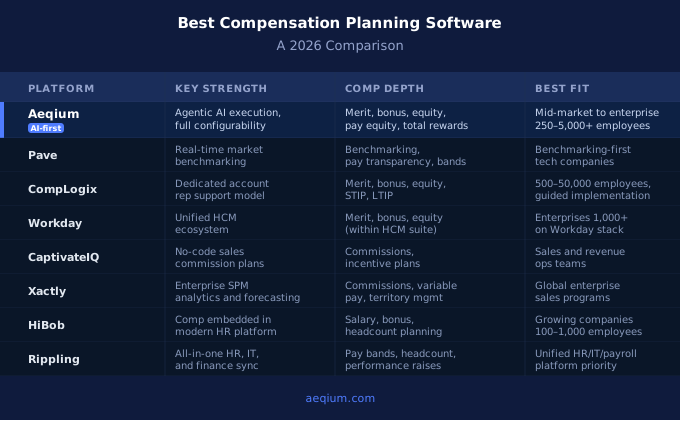
Aeqium vs Pave: Comparison Table
What Customers Say
Joe Bast, VP of People and Operations at Crisp, made the switch from Pave to Aeqium:
"Aeqium was a no-brainer. It costs us less than half of what we were being charged by Pave. It's easier to configure, it's easier for our managers to use, and our leadership team raves about it."
Who Should Choose Which
Choose Pave if: your primary need is live compensation benchmarking and market data, and you are comfortable running planning and analytics only within a single cycle window.
Choose Aeqium if: you need year round visibility into your compensation data, not just during the cycle, along with an AI that executes the work directly and a planning process flexible enough to configure without opening a support ticket every time something changes.
FAQ
Is Aeqium a replacement for Pave?
Aeqium and Pave solve different core problems. Aeqium is built for compensation planning, execution, and continuous analytics. Pave is built for compensation benchmarking and market data within a cycle. Many companies use Aeqium for planning while sourcing benchmark data separately.
Can Pave run compensation analytics between cycles?
Pave does not currently offer embedded analytics tools outside of the planning cycle itself, based on G2 review data. Aeqium is built to run reports and compare compensation data across cycles year round.
What makes Aeqium's AI different from Pave's?
Aeqium's AI executes compensation planning tasks directly through Aeqium Assist, automating work that normally requires manual spreadsheet effort. It doesn't just surface insights and leave the execution to the comp team.
Why do companies switch from Pave to Aeqium?
Companies typically switch when they need more flexibility in report customization, continuous visibility into their comp data, and an AI that does the work rather than just recommending it. Customers like Crisp also report meaningfully lower costs after switching.
Is Aeqium cheaper than Pave?
Pricing depends on company size and configuration, but customers who have made the switch, like Crisp, have reported paying less than half of what they were charged by Pave.